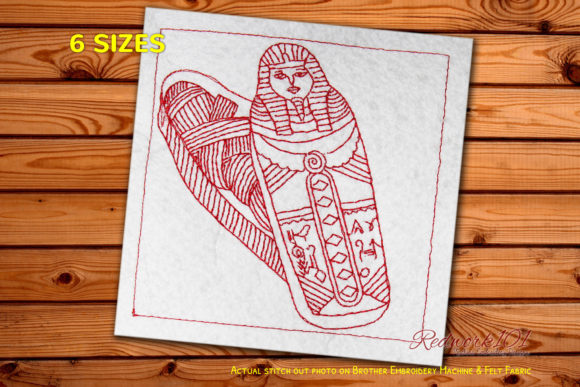
Ancient Mummy in a Sarcophagus
First Impression: Bold, Timeless, and Unexpectedly Versatile
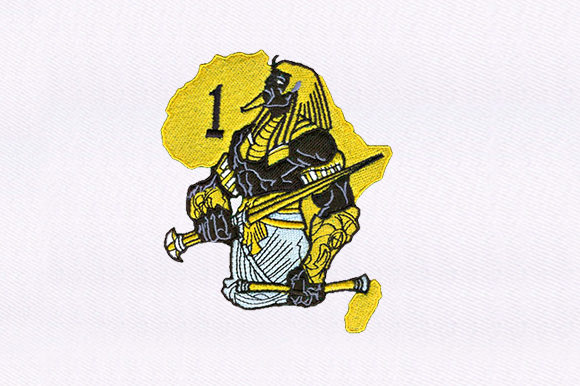
As an embroidery designer who’s reviewed thousands of digital embroidery files for small business merch, Ancient Mummy in a Sarcophagus stands out—not as a novelty gimmick, but as a surprisingly strong visual anchor. The title evokes ancient Egypt, yes—but the description (“detailed lines that will stitch out well on your machine”) signals craftsmanship, not just theme. It reads classic, not kitschy; dignified, not cartoonish. That matters deeply when you’re building brand identity through custom apparel or embroidered patches. For a boutique florist, a vintage-inspired bakery, or a creative studio with an affinity for mythology and history, this machine embroidery design adds instant narrative weight—without sacrificing professionalism.
Real-World Business Use: Where Ancient Mummy in a Sarcophagus Shines
This design excels where storytelling meets wearability. On a staff apron for a specialty coffee roaster? It becomes a conversation starter—elegant, memorable, and subtly aligned with artisanal heritage. As a chest patch on a linen work shirt for a handmade ceramics studio? It reinforces craftsmanship and timelessness. For a local pet brand leaning into Egyptian motifs (think “Anubis & Co.”), it’s a distinctive, scalable logo alternative—especially when paired with clean typography.
Ancient Mummy in a Sarcophagus also works beautifully across multiple touchpoints: as a cap embroidery accent for event merch, a subtle sleeve detail on tote bags for a museum gift shop, or even a refined label on product packaging for a natural skincare line inspired by ancient botanicals. Its structured composition translates well to embroidered patches—ideal for attaching to denim jackets, canvas totes, or branded uniforms. And because it’s rooted in clear line work, it holds up in printable mockups used for Etsy listings, wholesale catalogs, or client presentations.
Where to Use It Thoughtfully—Not Everywhere
While versatile, Ancient Mummy in a Sarcophagus isn’t universally scalable. Its detailed lines demand attention to context. Avoid placing it smaller than 2.5 inches tall on curved surfaces like cap fronts—fine outlines can blur or vanish during stitching. On dark uniforms or textured fabrics (like heavy twill or unbleached canvas), contrast becomes critical: test thread colors carefully. Light gold or antique bronze thread against navy or charcoal creates richness; white or ecru may disappear.
High stitch density is implied by “detailed lines”—so confirm stabilizer choice before production. A medium-weight cutaway works best for structured patches and aprons; tear-away suffices for stable cotton tote bags. Also, avoid pairing it with tiny lettering or overly busy background patterns—this design earns attention. Let it breathe. And if your small business merch includes items requiring frequent washing (like café aprons), verify that the stitch density supports durability without excessive bulk.
Brand Identity Impact: More Than Just Aesthetic
Using Ancient Mummy in a Sarcophagus signals intentionality. It tells customers your brand values depth, history, and visual distinction—not just trend-chasing. That builds trust, especially among buyers who seek handmade product authenticity and thoughtful design. Unlike generic vector icons, this machine embroidery design carries cultural resonance—when used respectfully and consistently, it strengthens recognition across touchpoints: from your Etsy banner to your staff’s embroidered caps.
It also elevates perceived product value. A tote bag with a precisely stitched Ancient Mummy in a Sarcophagus patch feels more collectible, more intentional, than one with a flat print. That perception directly influences buyer engagement and repeat purchases—key for craft businesses and local shops competing on experience, not just price.
Practical Embroidery Designer Notes for Small Business Owners
Before committing to production, run these checks:
- Test in black and white first—to assess line clarity and spacing without color distraction.
- Check minimum viable size—does Ancient Mummy in a Sarcophagus retain legibility at 2 inches? If not, simplify or adjust density with your digitizer.
- Review thread color contrast—especially on your target fabric. Print a physical swatch if possible.
- Inspect spacing between elements—tight gaps may collapse on low-stretch fabrics or during washing.
- Confirm hoop size compatibility—some versions may require larger hoops; verify before digitizing for caps or sleeves.
- Test on real fabric—not just stabilizer alone. Fabric texture dramatically affects how detailed lines render.
- Use proper stabilizer—especially for high-density areas near the sarcophagus edges.
- Create a printable mockup for client or team approval—visual alignment prevents costly re-runs.
- Compare beside existing design assets—does it harmonize with your logo, typography, and color palette?
- Confirm commercial licensing—since this is for small business merch, ensure your digital embroidery file permits resale, branded patches, and commercial embroidery use.
Final Thought: A Strategic Design Asset, Not Just a Pattern
Ancient Mummy in a Sarcophagus isn’t just another embroidery file—it’s a strategic tool for small business owners who understand that every stitch communicates. Whether you’re launching a new line of branded tote bags, outfitting your team in custom apparel, or creating limited-edition embroidered patches for a pop-up event, this design delivers visual authority and narrative cohesion. It bridges Africa-rooted iconography with modern embroidery execution—and when applied intentionally, it transforms ordinary merchandise into meaningful brand artifacts. For embroidery shops, apparel decorators, and handmade brands alike, Ancient Mummy in a Sarcophagus earns its place in your core design assets—not as decoration, but as distinction.