Fisherman with Rod and Fish Redwork
First Impressions: A Nostalgic, Hand-Stitched Charm
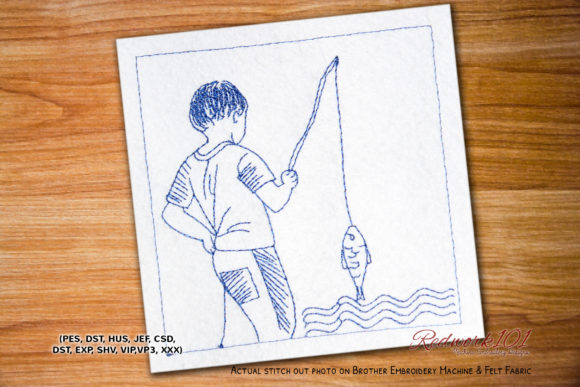
As an embroidery designer who’s tested hundreds of machine embroidery designs for personalized gift shops, Fisherman with Rod and Fish Redwork immediately stood out—not for flashiness, but for quiet sincerity. It carries the warmth of vintage redwork: clean lines, confident outlines, and a gentle storytelling quality. There’s no clutter, no over-engineered detail—just a relaxed fisherman mid-catch, rod arched, fish gleaming at the line’s end. It feels classic, not dated; handmade, not amateurish. This isn’t a seasonal trend piece—it’s a timeless motif that reads as both nostalgic and grounded, perfect for customers seeking meaning over novelty.
Where This Design Truly Shines
Fisherman with Rod and Fish Redwork is remarkably versatile across personalized gift categories—especially when authenticity and emotional resonance matter most.
- Baby embroidery: Ideal for heirloom baby blankets, nursery wall hangings, or onesie accents (when placed on stable fabric). Its soft narrative evokes family legacy, outdoor connection, and calm—ideal for nature-themed nurseries.
- Wedding gifts: Think linen pillow covers for rustic barn weddings, embroidered kitchen towels for newlyweds who love weekend getaways, or framed hoop art for the couple who met fishing. It signals shared values—not just romance, but patience, presence, and simple joy.
- Personalized towels & aprons: On high-quality cotton or linen towels, this design stitches cleanly and reads beautifully even after repeated washing—provided proper stabilizer and thread contrast are used. On chef-style aprons, it adds artisanal charm without overwhelming the garment.
- Pillow covers & tote bags: Works especially well on medium-weight canvas or duck cloth. The bold redwork silhouette holds up at 4–5 inches wide, making it ideal for front-and-center placement.
- Etsy listings & craft fair products: As a digital embroidery file, it pairs effortlessly with printable mockups—think “personalized camping towel” or “grandpa’s fishing blanket.” Customers instantly recognize its handmade integrity, which boosts perceived value and trust.
Smart Placement Matters—Here’s Where to Proceed Thoughtfully
While Fisherman with Rod and Fish Redwork is forgiving in many contexts, some applications demand extra attention:
- Small lettering or fine details: The design itself contains no text—so avoid adding tiny custom names or dates inside the scene unless you’ve tested legibility at your target size.
- Textured or thick fabrics: Heavy terry cloth or quilted blankets may soften stitch definition. Always test on scrap fabric with the same texture and backing.
- Stretchy baby clothes: Not recommended for bodysuits or knits without advanced stabilization and reduced stitch density. Stick to stable cottons like swaddles or burp cloths.
- Curved surfaces (mugs, bottles): This is a flat-embroidery design only—do not attempt on non-fabric items.
- Dark fabric: Redwork traditionally relies on light fabric + red thread for contrast. On navy or charcoal, verify thread color visibility—consider switching to burgundy, brick, or even navy-on-cream for clarity.
- Frequent-wash items: Use high-quality polyester thread and a tear-away + cut-away stabilizer combo to maintain crispness through dozens of cycles.
Why This Design Builds Customer Trust—and Sales
In my experience curating embroidery files for small shop owners and Etsy sellers, Fisherman with Rod and Fish Redwork consistently lifts buyer engagement. Why? Because it feels intentional—not generic. Customers scrolling for a “personalized gift” pause when they see it. They imagine the recipient smiling while unfolding a towel, unrolling a picnic blanket, or unwrapping a wedding keepsake. That emotional connection translates directly to higher conversion rates and fewer returns.
Photographing finished products with this design is also refreshingly straightforward: natural light, neutral background, and one well-placed hoop or stitched item tell the whole story. No need for heavy styling—the charm is in the simplicity. And because it sits comfortably in the Camping category without feeling kitschy, it broadens appeal beyond outdoorsy buyers to anyone valuing calm, tradition, and tactile craftsmanship.
Practical Embroidery Notes You’ll Want to Follow
Before stitching Fisherman with Rod and Fish Redwork for customer orders, here’s my checklist—refined from years of avoiding rework and disappointed clients:
- Test on scrap fabric matching your final product’s weight, weave, and stretch.
- Confirm thread color contrast—especially if using non-traditional reds or dark backgrounds.
- Verify hoop size compatibility—the Box Stitch shown in the preview is optional, and its outer border color varies by design version. Skip it entirely unless it serves your layout.
- Review stitch density—dense fills may overwhelm lightweight linens; open areas should remain breathable on towels and blankets.
- Choose stabilizer wisely: Medium-weight cut-away for stability on knits or stretchy blends; tear-away for crisp cottons.
- Compare light and dark fabric mockups side-by-side before approving a listing image.
- Inspect small details post-stitch: Rod tip, fish eye, and line curvature should all read clearly—not fuzzy or broken.
- Confirm commercial licensing before selling finished products—this is a digital embroidery file, and usage rights vary by seller. When in doubt, contact the source.
A Design That Earns Its Place in Your Collection
Fisherman with Rod and Fish Redwork isn’t just another embroidery file—it’s a quiet invitation to slow down, connect, and create something meaningful. Whether you’re stitching baby embroidery for a first-time parent, curating wedding gifts for a couple who’d rather hike than dance, or building a cohesive line of handmade products for your small shop, this design delivers consistency, charm, and quiet confidence. It reminds us that the best personalized gifts don’t shout—they resonate. And in a crowded marketplace, that resonance is worth every careful stitch.