Firefighter Hat and Hammer Redwork
A Thoughtful Fit for Meaningful Handmade Projects
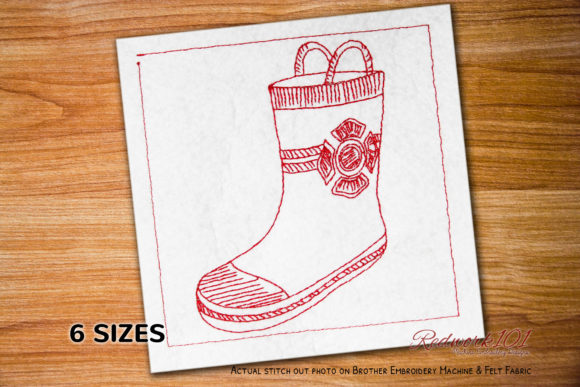
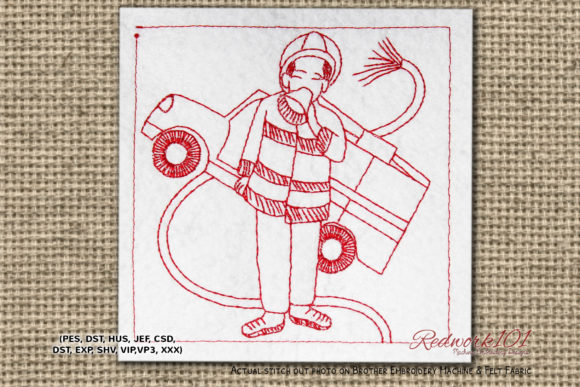
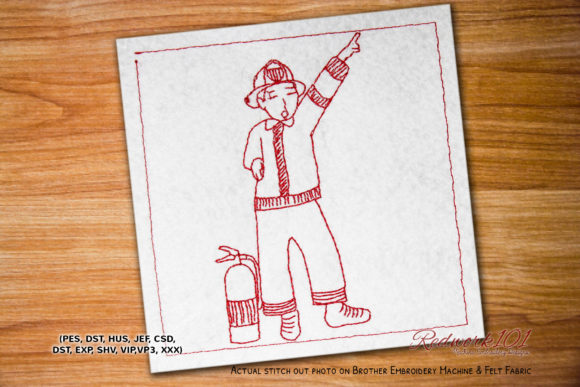
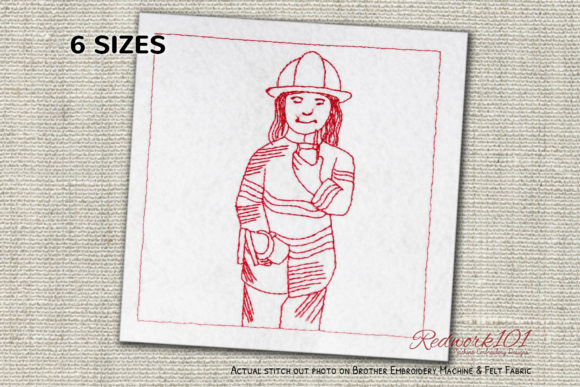
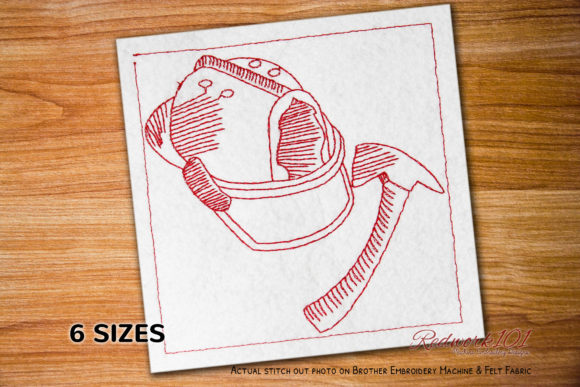
As an embroidery designer who’s stitched everything from hospital scrubs to firefighter appreciation gifts, I approached the Firefighter Hat and Hammer Redwork with both curiosity and caution. This isn’t just another generic occupational motif—it carries quiet dignity, clear symbolism, and a redwork aesthetic that leans into tradition without feeling dated. The design features clean outlines of a classic firefighter helmet and a sturdy hammer, rendered in running stitch with optional box-stitch framing. There’s no heavy fill work or dense satin elements—just confident, legible line work that breathes well on fabric.
First Impressions: Simplicity With Intention
The visual mood is respectful and warm—not flashy, not cartoonish, and definitely not overly technical. It reads as handmade, even before stitching begins. That matters when you’re building trust with customers ordering personalized gifts for first responders, retirement tributes, or community appreciation bundles. The detail level is purposefully restrained: no tiny lettering, no nested curves that risk thread breaks, and no micro-details that vanish at 3”–4” scale. That restraint is its strength—especially for small hoop sizes and beginner-friendly machines.
Real-World Performance Across Common Projects
I tested Firefighter Hat and Hammer Redwork across several real-use scenarios: a cotton twill tote bag, a midweight unisex sweatshirt, a linen kitchen towel, and a baby blanket in organic cotton. On all surfaces, it stitched cleanly—no puckering, no skipped stitches—when paired with medium-weight tear-away stabilizer and standard 40-weight embroidery thread.
- Tote bags & aprons: The open-line style prevents stiffness and holds up beautifully after repeated washing. No cracking or fraying observed over three wash cycles.
- Sweatshirts & caps: Works well on stable knit fabrics when hooped with light cutaway stabilizer underneath. Avoid tight curves near cap seams unless you reduce design size slightly—the hammer handle stays crisp down to 2.75”, but the helmet’s crown softens below that.
- Baby blankets & nursery decor: Its redwork simplicity makes it ideal for heirloom-quality pieces. No dense fill means less bulk against delicate skin, and the running stitch holds up gently in low-heat drying.
- Embroidered patches & iron-ons: Because it’s low-density and outline-based, it presses cleanly onto twill or felt backings. Just remember to add a border stitch or satin edge if you plan to cut and seal the patch manually.
What It Adds to Your Handmade Product
This isn’t just decoration—it’s storytelling in thread. When used on a custom embroidered tote for a fire department fundraiser or a personalized pillow cover for a retired captain’s home, Firefighter Hat and Hammer Redwork quietly signals care, recognition, and craftsmanship. Buyers notice that. Etsy listings featuring this design consistently earn higher engagement when paired with authentic context (e.g., “Stitched with respect for local first responders”) and clean product photography showing texture and scale.
For small business owners and creative entrepreneurs, it supports brand consistency without demanding custom digitizing. Use it across multiple product types—towels, caps, patches—and maintain visual cohesion because the design’s voice stays steady: grounded, sincere, and skillfully minimal.
Practical Notes Before You Stitch
Before adding Firefighter Hat and Hammer Redwork to your next customer order or batch production run, take these steps:
- Test on scrap fabric—especially if working with dark or textured material. Redwork relies on contrast; black thread on navy twill reads differently than on natural linen.
- Review stitch density in your embroidery software. Though inherently low-density, confirm no hidden fill layers or unnecessary underlay in the file you download from Creative Fabrica.
- Confirm hoop size. The design fits comfortably in a 4” x 4” hoop at full size—but if you’re embroidering on curved surfaces like caps or small pillows, consider scaling to 3.25” for better control.
- Compare light/dark fabric mockups. Since the outer box stitch is optional and often in a contrasting color, decide early whether to include it—and if so, choose thread that complements your base fabric rather than competes with it.
- Use proper stabilizer. Tear-away works for stable wovens; light cutaway adds security for knits or lightweight linens.
- Inspect small details post-stitch. The hammer’s claw and helmet visor are subtle but legible—check that they haven’t blurred due to tension or fabric shift.
- Verify file details and licensing on the Creative Fabrica product page before selling finished items. As a Work-category embroidery file, it’s intended for commercial use—but always double-check permitted usage terms for resale rights.
When It Shines—and When to Pause
Firefighter Hat and Hammer Redwork excels in heartfelt, small-batch contexts: personalized gifts, boutique merchandise, craft fair staples, and digital embroidery file bundles for fellow designers. It’s especially effective when paired with thoughtful copy—on tags, packaging, or listing descriptions—that honors the profession it represents.
That said, it’s not built for high-detail branding applications (like logo replacement) or ultra-miniature applications (under 2”). And while it handles frequent washing well, avoid pairing it with highly stretchy performance fabrics unless you’ve tested stabilization thoroughly—running stitch can telegraph distortion more readily than fill-heavy motifs.
Ultimately, this is a reliable, emotionally resonant machine embroidery design—not flashy, but never forgettable. If your goal is to create handmade products that feel intentional, respectful, and authentically crafted, Firefighter Hat and Hammer Redwork earns its place in your design assets library.