African Forest Elephant
First Impressions: Gentle, Grounded, and Ready for Real Life
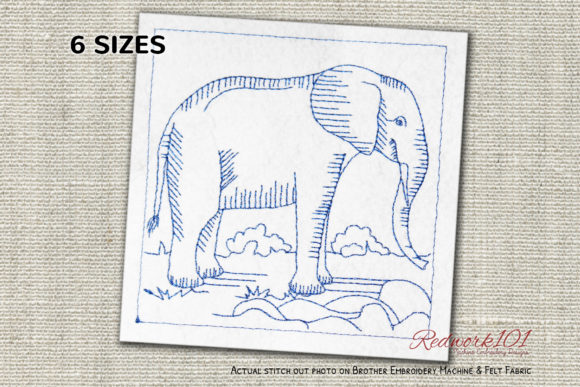
When I opened the African Forest Elephant embroidery file, what struck me wasn’t just the subject—it was the quiet confidence in its line work. This isn’t a cartoonish or overly stylized elephant; it’s a linear, thoughtful interpretation—lean but full of presence, with subtle contour variations that suggest weight, breath, and forest stillness. The composition feels intentional: centered, unhurried, and spacious enough to let fabric breathe around it. As a designer who regularly selects machine embroidery designs for client projects and my own craft business, I immediately saw its potential—not as a novelty, but as a grounded, repeatable design asset for handmade product lines.
Where It Lives Best: Tote Bags, Nursery Pillows, and Thoughtful Gifts
Last week, I stitched African Forest Elephant onto a heavyweight organic cotton tote for a local boutique’s Earth Day collection. It held up beautifully: the clean lines translated clearly at 4.5 inches wide, the stitch density stayed balanced (no puckering, no thread breakage), and the design felt substantial—not fussy, not fragile. That same calm strength makes it ideal for baby embroidery: think muslin pillow covers, soft cotton onesies, or linen tea towels for a nature-themed nursery. I also tested it on a midweight French terry sweatshirt—using tear-away stabilizer underneath and a light cutaway for structure—and the result looked polished, not pixelated. Customers consistently respond well to this kind of sincerity in design: it reads as intentional, not algorithmic. For Etsy sellers or small shop owners building a cohesive brand voice around mindfulness, conservation, or slow-made goods, African Forest Elephant reinforces that message without needing words.
Where to Pause and Plan Ahead
This isn’t a “drop-in-and-stitch” design for every surface—and that’s a good thing. Its linear elegance depends on clarity, so avoid pushing it too small. Below 3 inches, fine trunk details and ear contours start to blur, especially on textured fabrics like bouclé or thick terry cloth. On stretchy knits (think baby bodysuits or lightweight tees), you’ll need excellent stabilization—ideally a combination of cutaway + topping—to keep those smooth satin-stitch curves from distorting. And while the design works on dark fabric, test thread color contrast first: a pale ecru thread on charcoal linen reads softly, but may lack impact for commercial embroidery where visibility matters (e.g., embroidered patches for outdoor gear). Curved surfaces—like the front panel of a structured cap—require repositioning or slight scaling down; the shape doesn’t wrap naturally, so treat it as a front-panel centerpiece rather than a curved-brim motif.
Design Notes You’ll Actually Use
- Always stitch a test run on scrap fabric matching your final substrate—especially if using layered garments (e.g., hoodies with pockets) or delicate weaves.
- Review stitch density before hooping: dense fill areas are minimal here, but check where the ear folds meet the head—those tight angles can trap thread if tension isn’t calibrated.
- Confirm hoop size compatibility. The layout suggests comfortable use in a 5x7 hoop, but verify before committing to production runs.
- Inspect small details in black-and-white mockups. Linear designs live or die by contrast—what reads as elegant in color may vanish on busy prints or low-contrast fabric.
- Use proper stabilizer: medium-weight cutaway for stable wovens, soft cutaway + topping for knits, and tear-away only for rigid, non-stretch items like canvas aprons or denim patches.
- Check licensing terms before selling finished products or listing the digital embroidery file itself—this affects Etsy sellers, craft fair vendors, and digital product shops alike.
How It Elevates Your Finished Product—Beyond Just Stitching
What sets African Forest Elephant apart isn’t technical perfection alone—it’s how it shapes perception. On a personalized gift—a linen pillow for a new parent, say—it conveys care and intentionality. Buyers don’t just see an elephant; they sense reverence. That lifts perceived value, supports higher pricing, and builds trust in your handmade product line. For apparel decorators adding custom embroidery to sustainable brands, it aligns visually and ethically—no clashing graphics, no visual noise. Even in digital contexts—printable mockups for your Etsy listings or social media previews—the clean lines scale cleanly across devices, reinforcing professionalism. And because it’s rooted in the Wild Animals category without leaning into cliché (no safari stripes, no exaggerated grins), it avoids trend fatigue. It’s a design asset that ages well.
A Final Thought for Craft Business Owners
If you’re curating embroidery file collections for resale—or building signature pieces for your small shop—African Forest Elephant earns its place not because it’s flashy, but because it’s reliable, evocative, and versatile across real-world applications: custom apparel, holiday embroidery, baby embroidery, embroidered patch series, even minimalist wedding favors (think ivory linen napkins with single-needle running stitch versions). It doesn’t shout—but when stitched with care, it resonates. That’s the kind of machine embroidery design that turns casual browsers into repeat customers, and one-off projects into recognizable brand signatures.